
| 产品 | 提前预定时间 | 取消政策 | 原价 | 优惠价 | ||
|---|---|---|---|---|---|---|
| 产品 | 提前预定时间 | 取消政策 | 原价 | 优惠价 | ||
|---|---|---|---|---|---|---|
瓊庫什台大草原作為未大規模開發生態區域,目前不設門票也無需官方預約,但進入當地村莊及草原範圍需尊重當地社區管理。遊玩時需特別注意:從特克斯縣城前往瓊庫什台村的道路後段為山路,路窄彎急且多為砂石或簡易柏油路面,建議駕駛高底盤車輛並避免雨天、雪天或夜間行駛;草原與森林地區晝夜溫差極大且天氣多變,即使在夏季也必須攜帶防風保暖外套、雨具及防曬用品;請務必在指定區域停車或露營,切勿為尋找獨特視角而隨意駕車碾壓草場或進入牧民私人牧場;請將產生的所有垃圾自行帶走,嚴禁野外生火;當地為傳統哈薩克牧區,請尊重牧民生活習慣與宗教信仰,拍攝人物及民居前請先禮貌徵得同意;如需住宿,建議提前聯繫村裡客棧或氈房確認房源,並做好住宿條件較為簡樸的心理準備。
Qiongkushitai Grassland, as an ecologically undeveloped area, currently does not require entrance tickets or official reservations. However, entering local villages and grassland areas requires respect for local community management. When visiting, please pay special attention: the latter section of the road from Tekes County town to Qiongkushitai Village is a mountain road—narrow, winding, and mostly gravel or simple asphalt pavement. It is recommended to drive a high-clearance vehicle and avoid travel during rainy, snowy, or nighttime conditions. Grassland and forest areas experience extreme day-night temperature fluctuations and changeable weather; even in summer, it is essential to bring windproof and warm outerwear, rain gear, and sun protection. Always park or camp in designated areas. Do not drive across grasslands or enter herders' private pastures in search of unique viewpoints. Please take all trash with you and strictly prohibit open fires in the wild. The area is a traditional Kazakh pastoral region; respect the herders' lifestyle and religious beliefs, and politely ask for permission before photographing people or residences. If accommodation is needed, it is advisable to contact village guesthouses or yurts in advance to confirm availability and be mentally prepared for relatively simple lodging conditions.
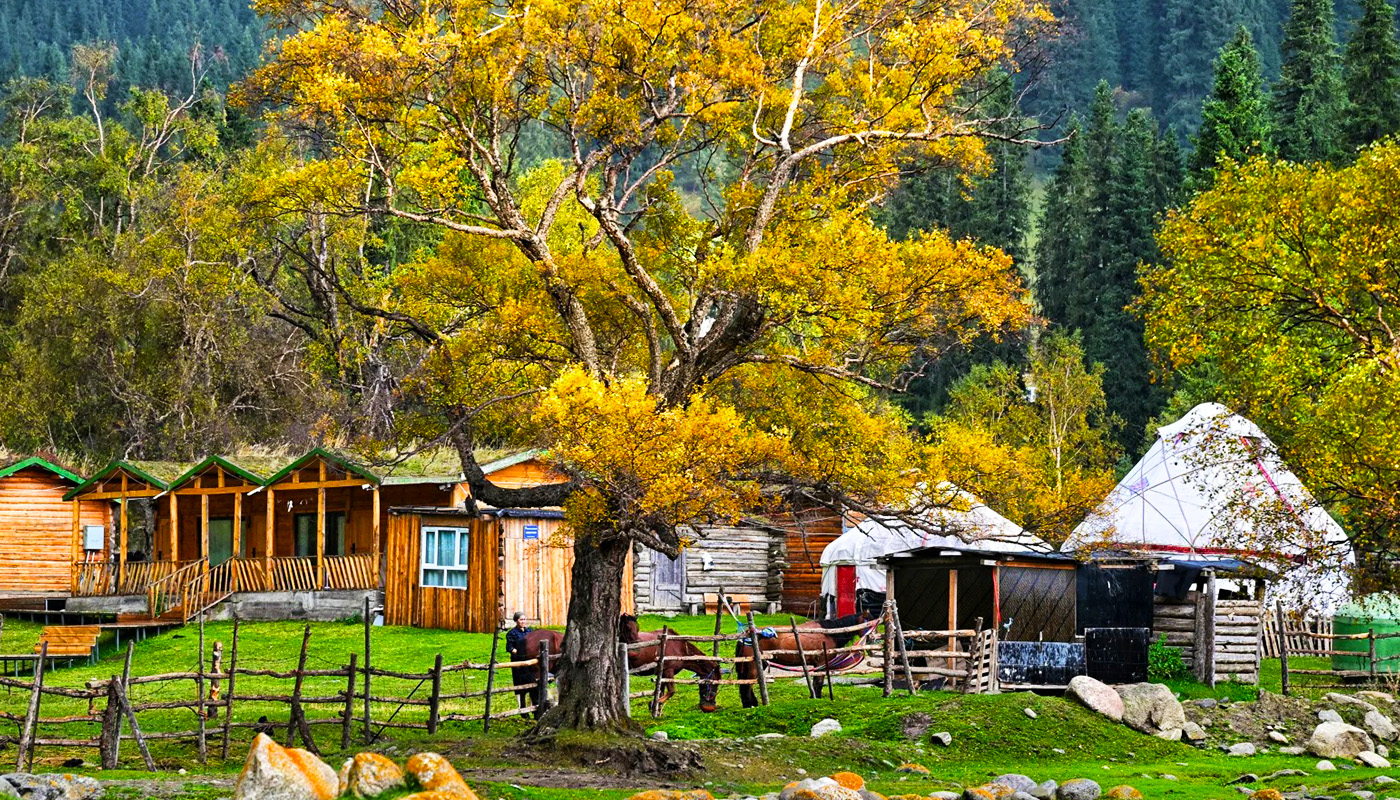
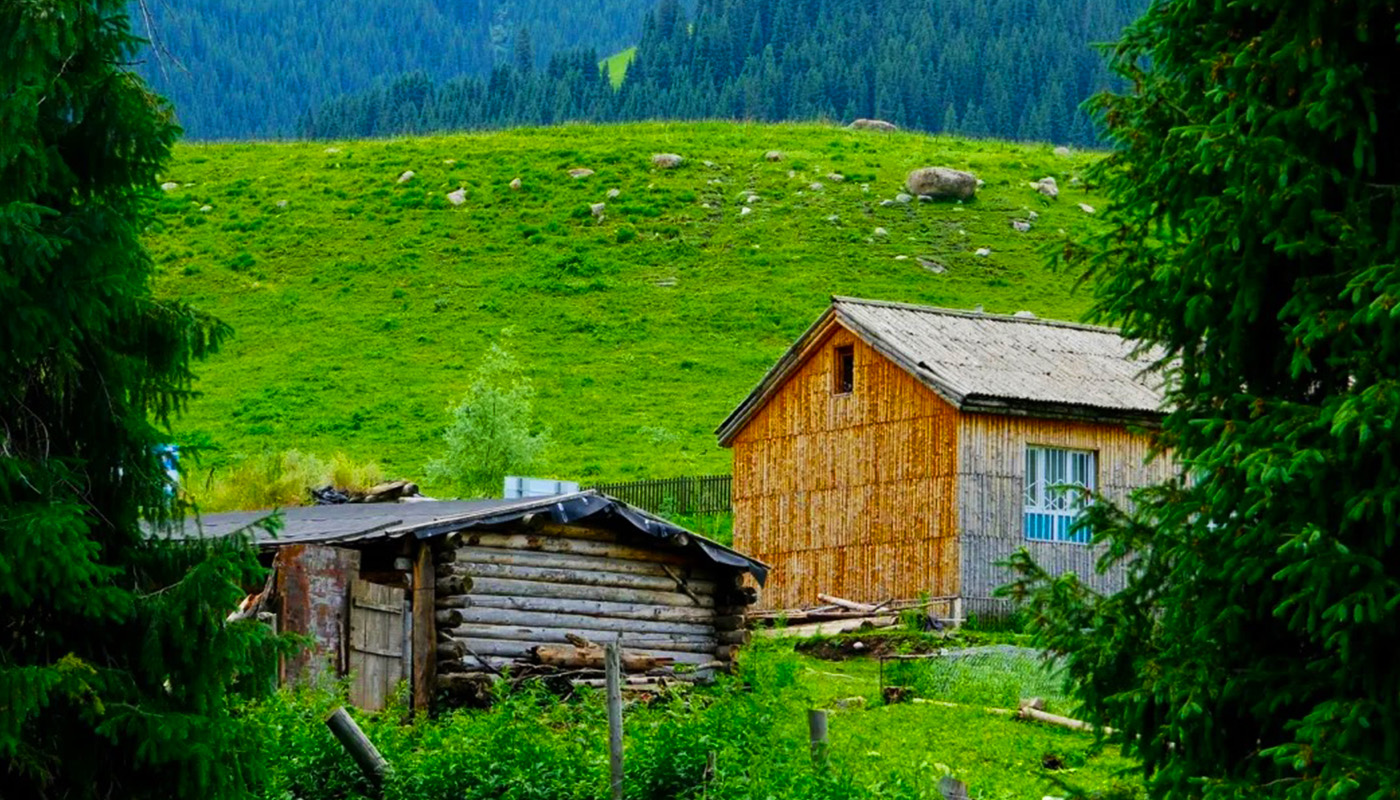
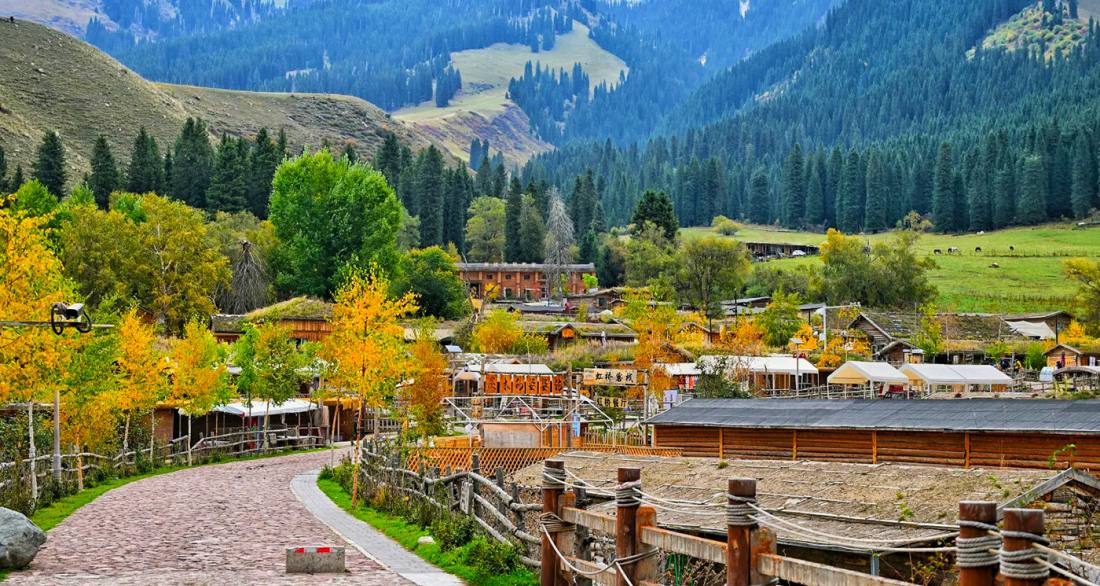
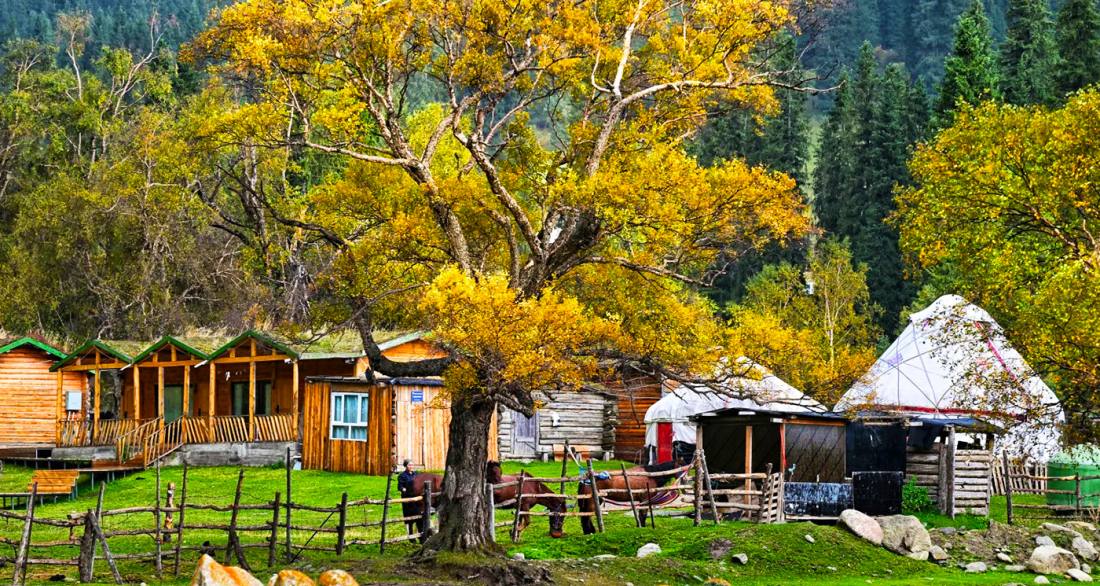
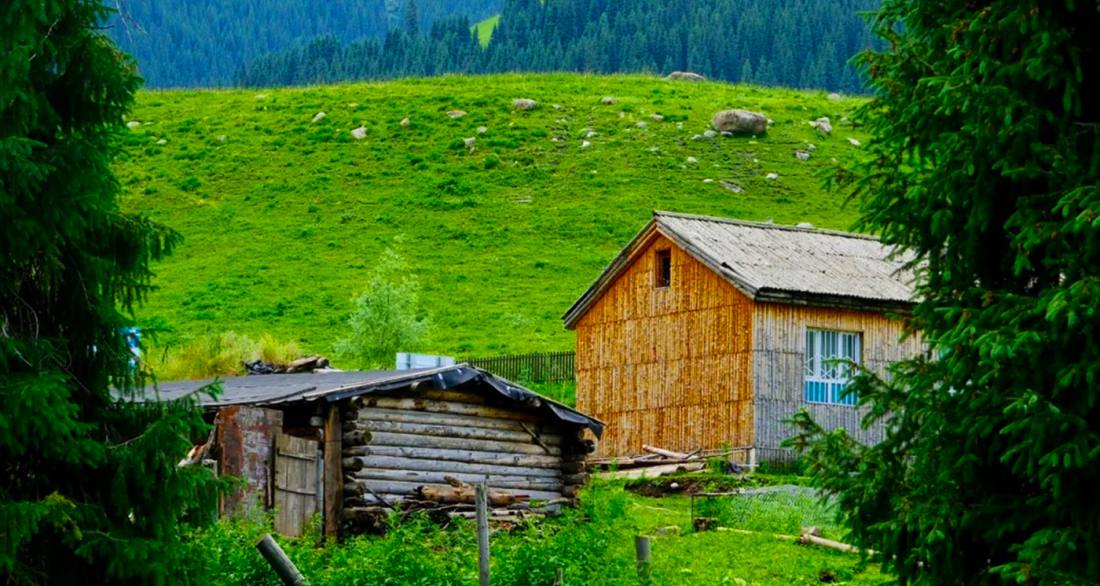
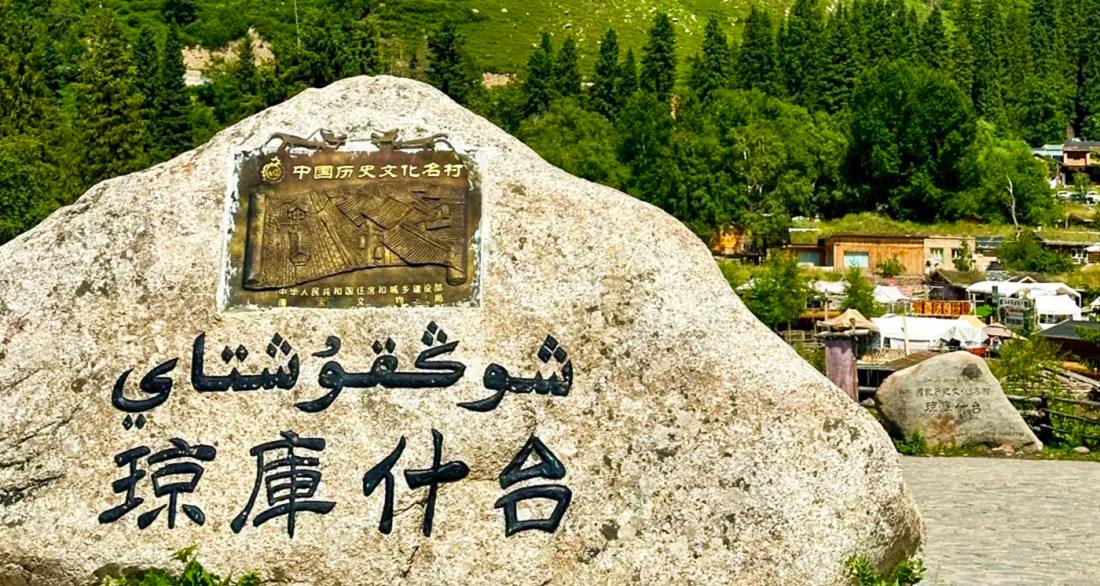
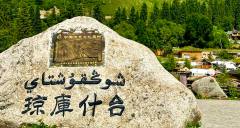
瓊庫什台大草原位於新疆伊犁特克斯縣南部天山腹地,是喀拉峻-庫爾德寧世界自然遺產地的延伸區域,也是西天山國家級自然保護區的核心組成部分。這片面積達2800平方公里的立體草原,以“層疊式溝壑地貌”聞名,草原隨山勢起伏如凝固的海浪,與墨綠色的雪嶺雲杉林、銀白的天山雪峰共同構成“色彩、線條、光影”三重奏的自然奇觀。其腹地的瓊庫什台村是中國現存最完整的哈薩克族木構建築群聚集地,近300棟百年木屋以原木榫卯構築,不用一釘一鐵,是烏孫古道北入口及遊牧文化活態博物館。每年5月至8月,這裡既是野百合、金蓮花等上百種高山植物的基因庫,也是哈薩克牧民傳統轉場的夏牧場,遊客可徒步穿越秘境森林、騎馬探訪喀拉峻草原,或在星空下入住木屋氈房,體驗“人與自然共生”的原始詩意。
Qiongkushitai Grassland is located in the heart of the Tianshan Mountains in southern Tekes County, Ili, Xinjiang. It is an extension of the Kalajun-Kurdening UNESCO World Natural Heritage Site and a core component of the West Tianshan National Nature Reserve. This three-dimensional grassland, spanning 2,800 square kilometers, is renowned for its "layered ravine landform." The grassland undulates like frozen waves along the mountain slopes, forming a natural wonder of "color, line, and light" alongside dark green Tianshan spruce forests and silver-white snow-capped peaks. Deep within lies Qiongkushitai Village, home to China's most intact collection of Kazakh wooden architecture, with nearly 300 century-old log cabins constructed using traditional mortise and tenon techniques without a single nail or piece of iron. It serves as the northern entrance to the Ancient Wusun Trail and a living museum of nomadic culture. From May to August each year, the area becomes both a gene pool for over a hundred species of alpine plants, such as wild lilies and globeflowers, and a summer pasture for traditional Kazakh herding migrations. Visitors can hike through pristine forests, explore the Kalajun Grassland on horseback, or stay in log cabins or yurts under the starry sky, experiencing the primal poetry of "harmony between humanity and nature."