

| 产品 | 提前预定时间 | 取消政策 | 原价 | 优惠价 | ||
|---|---|---|---|---|---|---|
| 产品 | 提前预定时间 | 取消政策 | 原价 | 优惠价 | ||
|---|---|---|---|---|---|---|
瑪納斯國家濕地公園無需提前預約,可直接在景區入口處購票入園,建議遊玩前通過官方平台或電話確認當日開放時間和門票政策。遊客進入濕地公園需嚴格遵守以下規定:公園核心區域為生態保育區,遊客必須沿指定木棧道或觀景路線遊覽,嚴禁擅自進入蘆葦叢、沼澤等封閉保護區;為保護鳥類棲息環境,禁止使用無人機、禁止大聲喧嘩、禁止投餵或驚擾任何野生動物;觀鳥時建議自備望遠鏡,穿著舒適的徒步鞋並備好防曬、防蚊用品;園區內嚴禁採摘植物、丟棄垃圾,請將廢棄物帶出;夏季湖區日曬強烈,需攜帶足夠飲用水;冬季部分區域可能封閉,出行前請查詢最新公告。
Manas National Wetland Park does not require advance reservations. Tickets can be purchased directly at the entrance. It is recommended to confirm the daily opening hours and ticket policies through official platforms or by phone before visiting. Visitors must strictly adhere to the following regulations: the core areas of the park are ecological conservation zones, and visitors must stay on designated boardwalks or viewing routes. Entering closed protected areas such as reed marshes or swamps is strictly prohibited. To protect bird habitats, the use of drones, loud noises, and feeding or disturbing any wildlife are prohibited. For birdwatching, it is advisable to bring binoculars, wear comfortable hiking shoes, and prepare sun protection and mosquito repellent. Picking plants and littering are strictly forbidden within the park; please take all waste with you. During summer, the lake area experiences intense sunlight, so carrying sufficient drinking water is essential. Some areas may be closed in winter, so check the latest announcements before your trip.
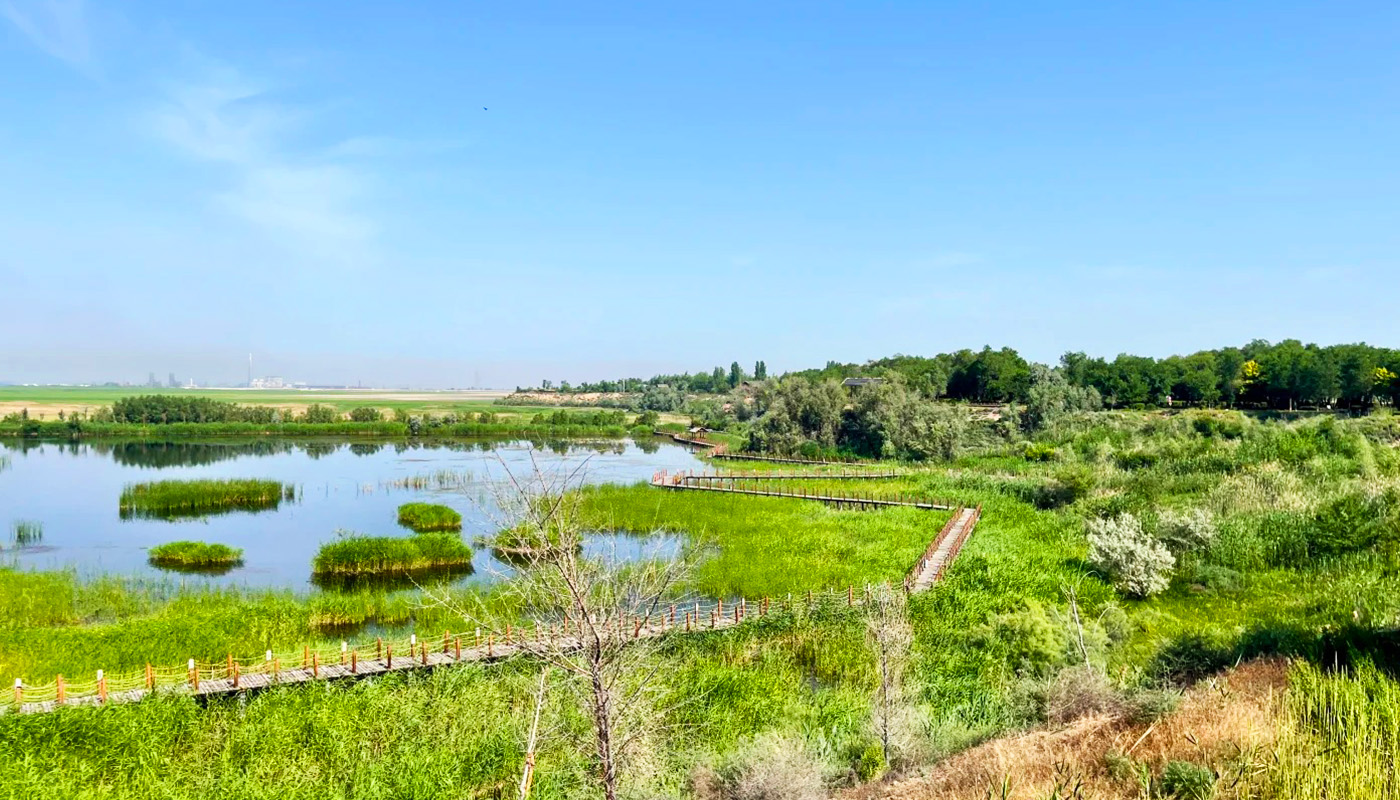
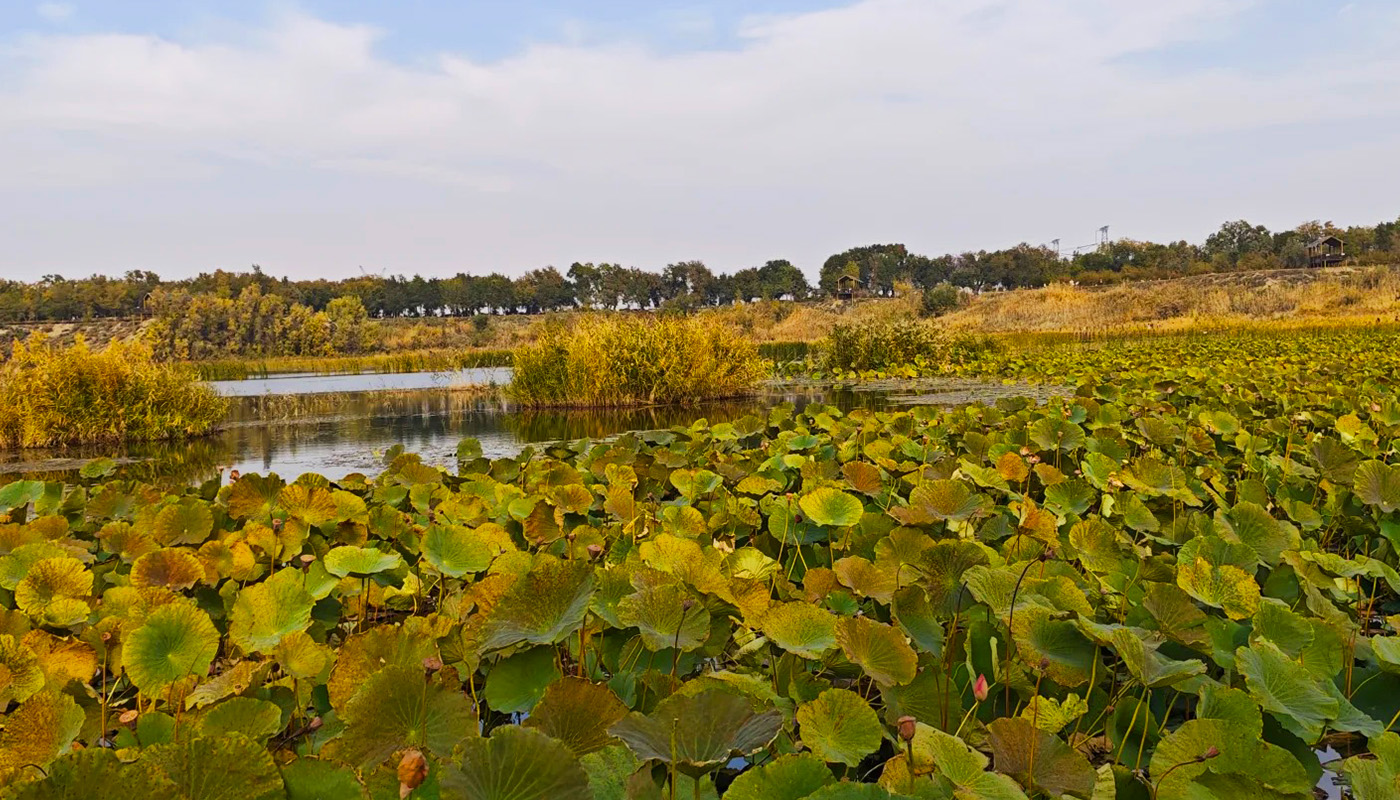
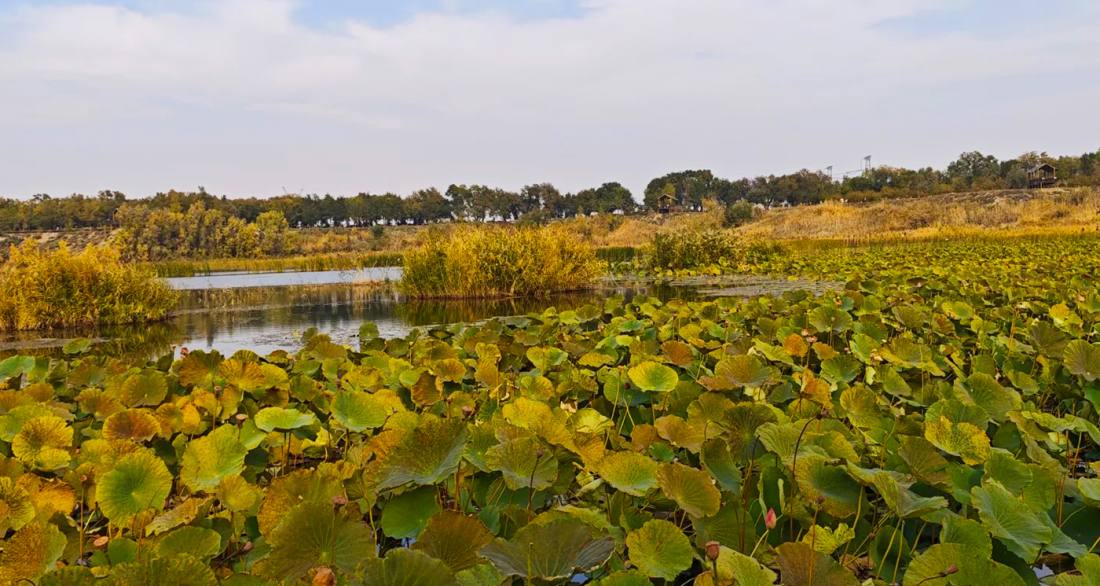
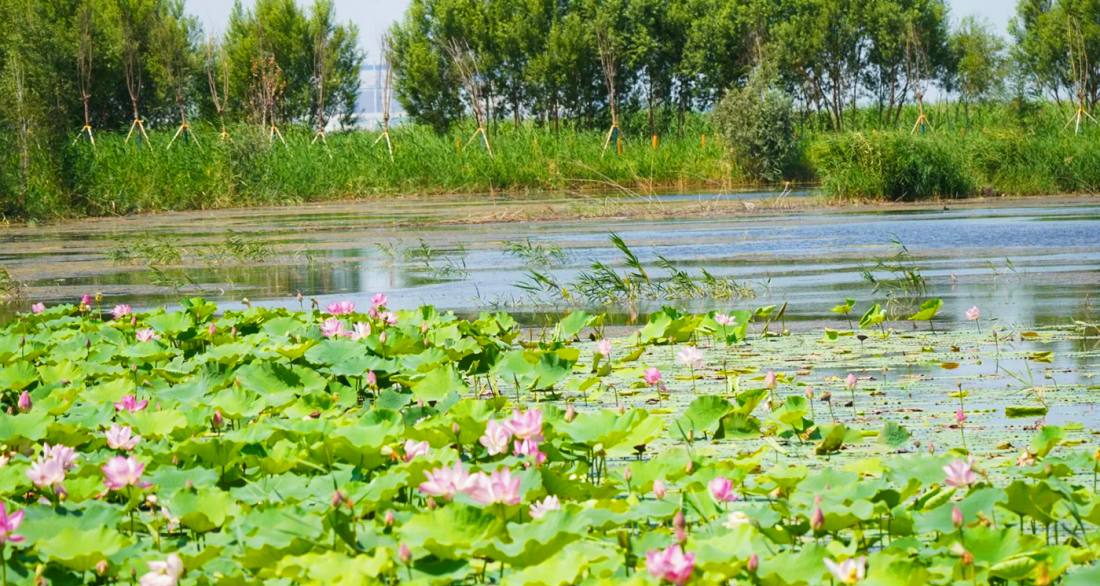
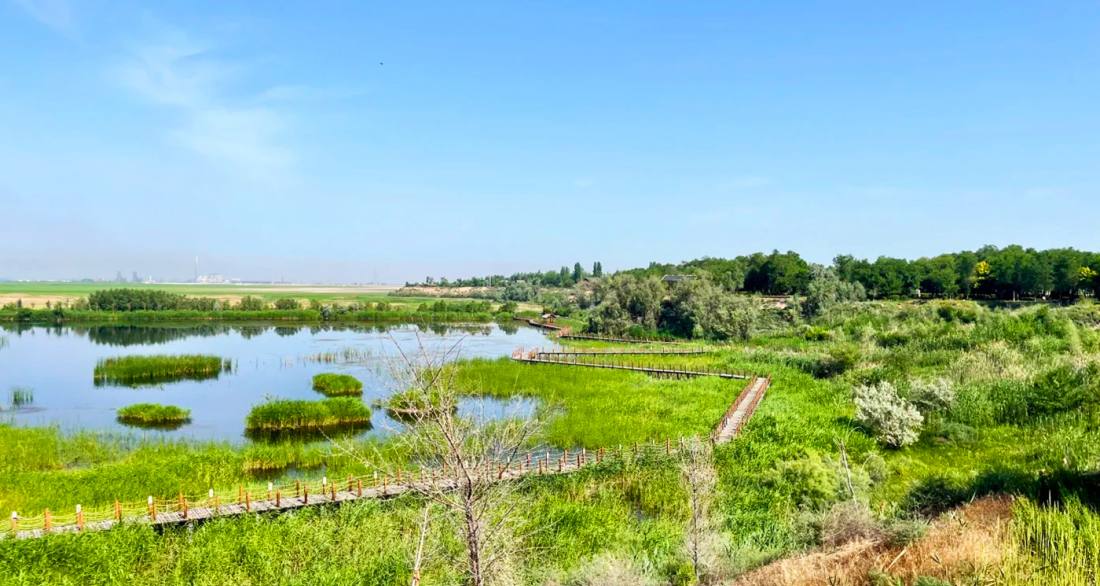
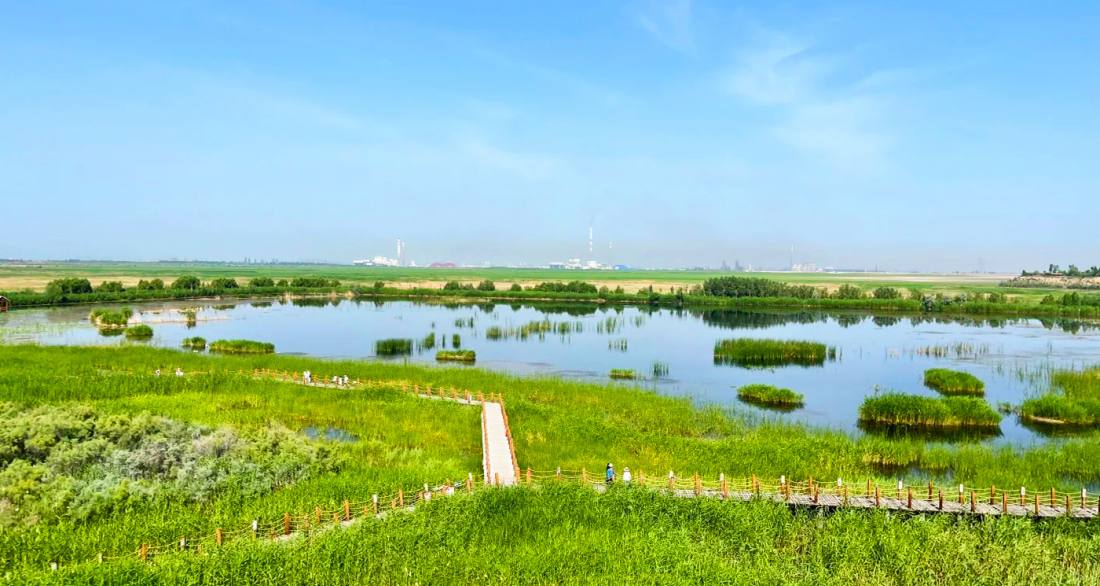
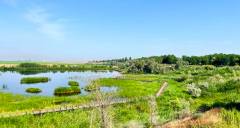
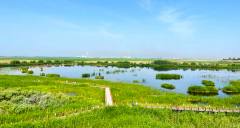
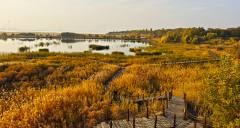
瑪納斯國家濕地公園位於新疆昌吉回族自治州瑪納斯縣中部平原地帶,是天山北坡經濟帶中段重要的生態屏障。公園總規劃面積廣闊,包含河流濕地、庫塘濕地、沼澤濕地等多種濕地類型,完整展示了濕地生態演替過程。作為世界候鳥遷徙路線的重要節點,這裡記錄有多種野生動物,包括眾多鳥類,如白鶴、大天鵝等國家一級保護動物,以及紅柳、胡楊等豐富植物,被譽為「候鳥天堂」和「北疆生態綠腎」。公園內設觀鳥台、科普館等設施,是集生態保護、科普研學與自然觀光於一體的國家級濕地公園。
Manas National Wetland Park is situated in the central plain area of Manas County, Xinjiang, serving as a vital ecological barrier in the mid-section of the northern slope of the Tianshan Mountains economic belt. The park covers a large total planned area and encompasses diverse wetland types, including river wetlands, reservoir wetlands, and marsh wetlands, fully demonstrating the process of wetland ecological succession. As a key node on the world's migratory bird routes, it is home to a variety of wild animals, including numerous bird species, such as first-class protected animals like white cranes and whooper swans, along with abundant plant species like tamarisk and populus euphratica, earning it the titles "Bird Paradise" and "Northern Xinjiang's Ecological Green Kidney". The park features facilities such as bird-watching platforms and science education centers, making it a national wetland park that integrates ecological conservation, scientific research, and nature tourism.